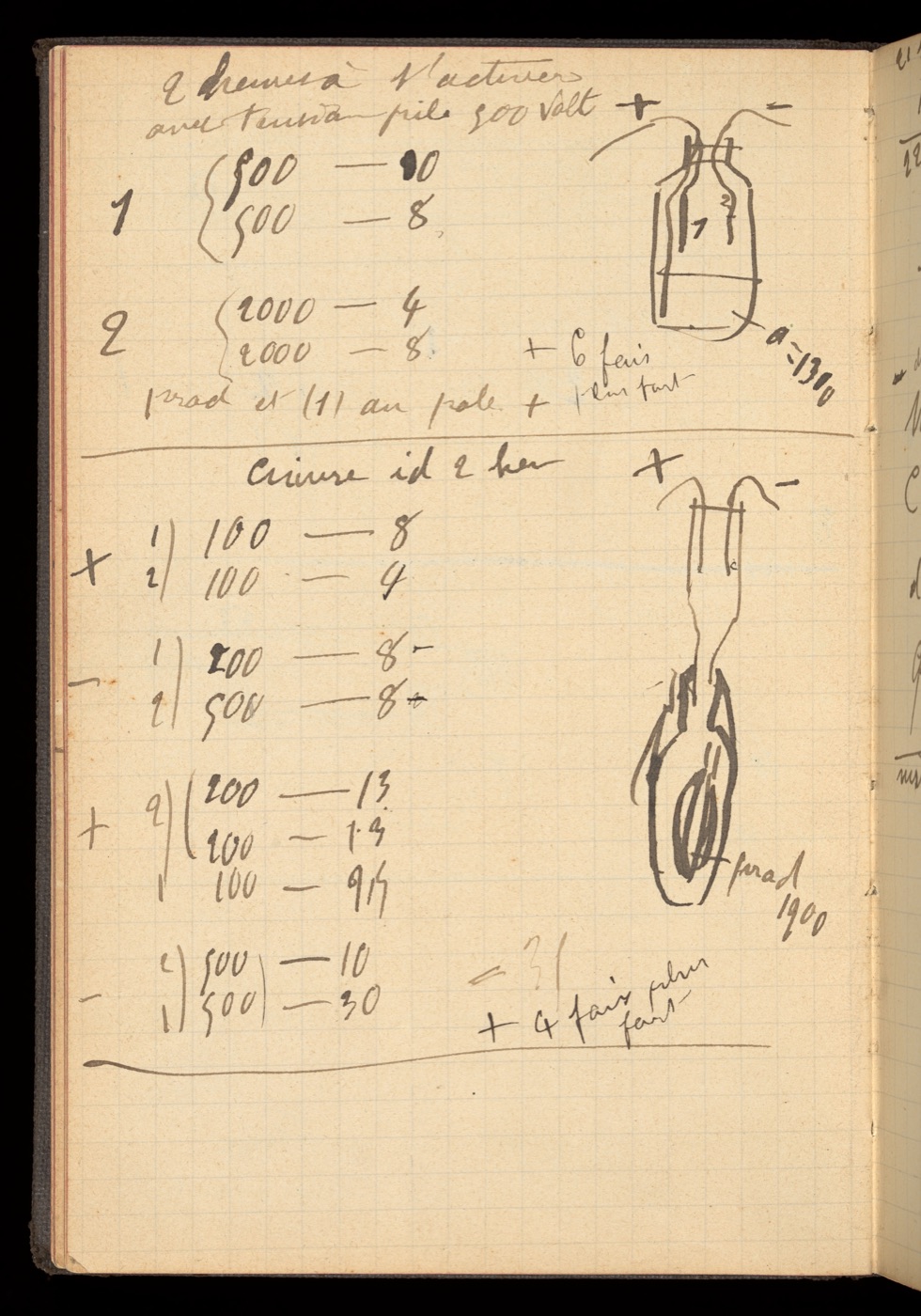
“In this makeshift laboratory we worked practically unaided during two years, occupying ourselves as much with chemical research as with the study of the radiation of the increasingly active products we were obtaining.”
From her book Pierre Curie, 1923, about the years after 1898. Translated by Charlotte and Vernon Kellogg, 1923.
Wellcome Collection, which owns it, describes it as her notes of experiments on radioactive substances, with rough pen drawings of apparatus. A small label on the cover reads “M. Curie 1900”.
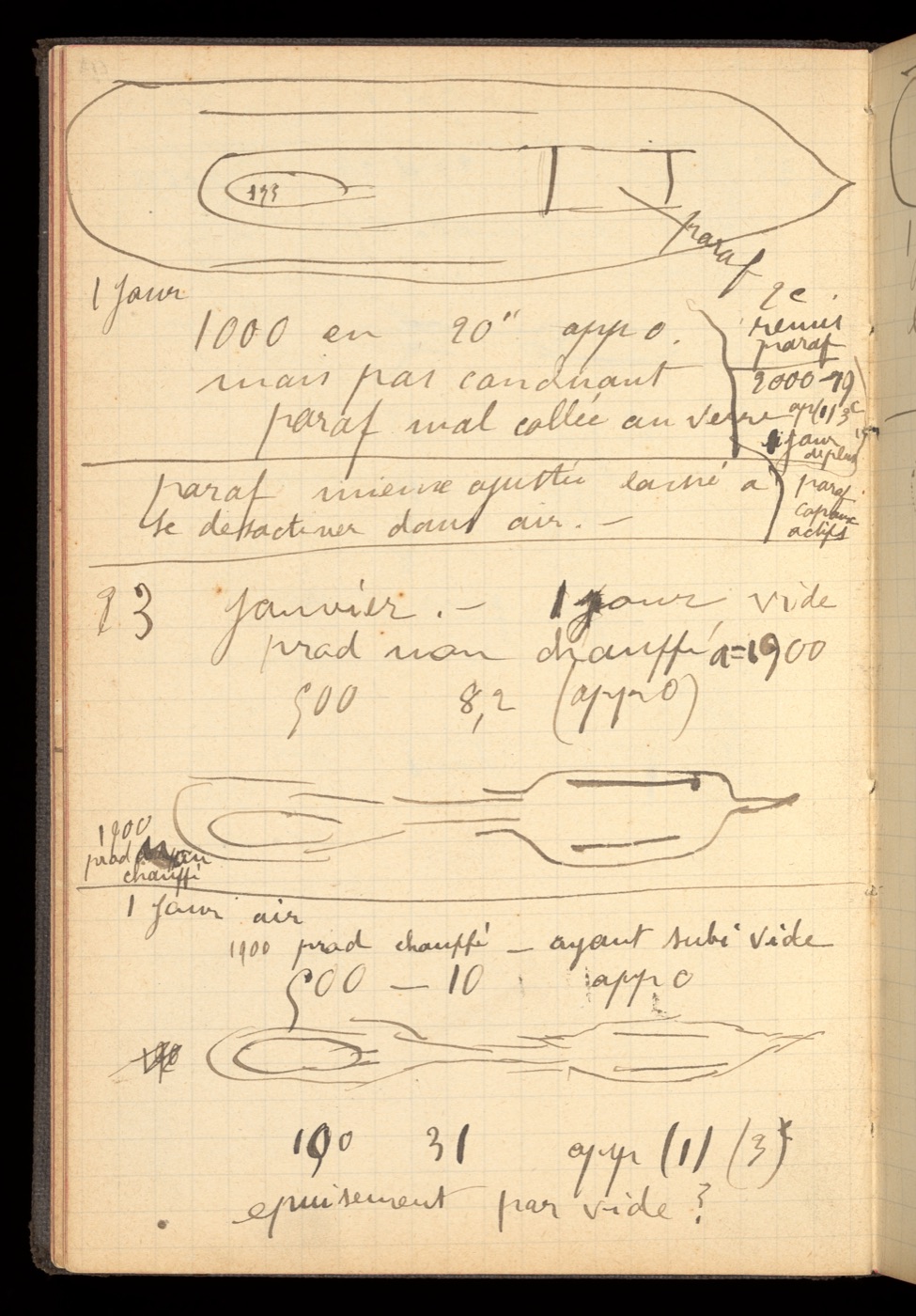
“We were at this time entirely absorbed in the new field that opened before us, thanks to the discovery so little expected. And we were very happy in spite of the difficult conditions under which we worked.”
From her book Pierre Curie, 1923. Translated by Charlotte and Vernon Kellogg, 1923.
Lindsey Simcox, of Aurora Health Physics Services, measured the radioactivity in this notebook with her colleagues. They found radium-226, firmly fixed in the cover.
The Society for Radiological Protection reported in 2015 that the levels were significant. It said they were not necessarily alarming, if certain controls are in place.
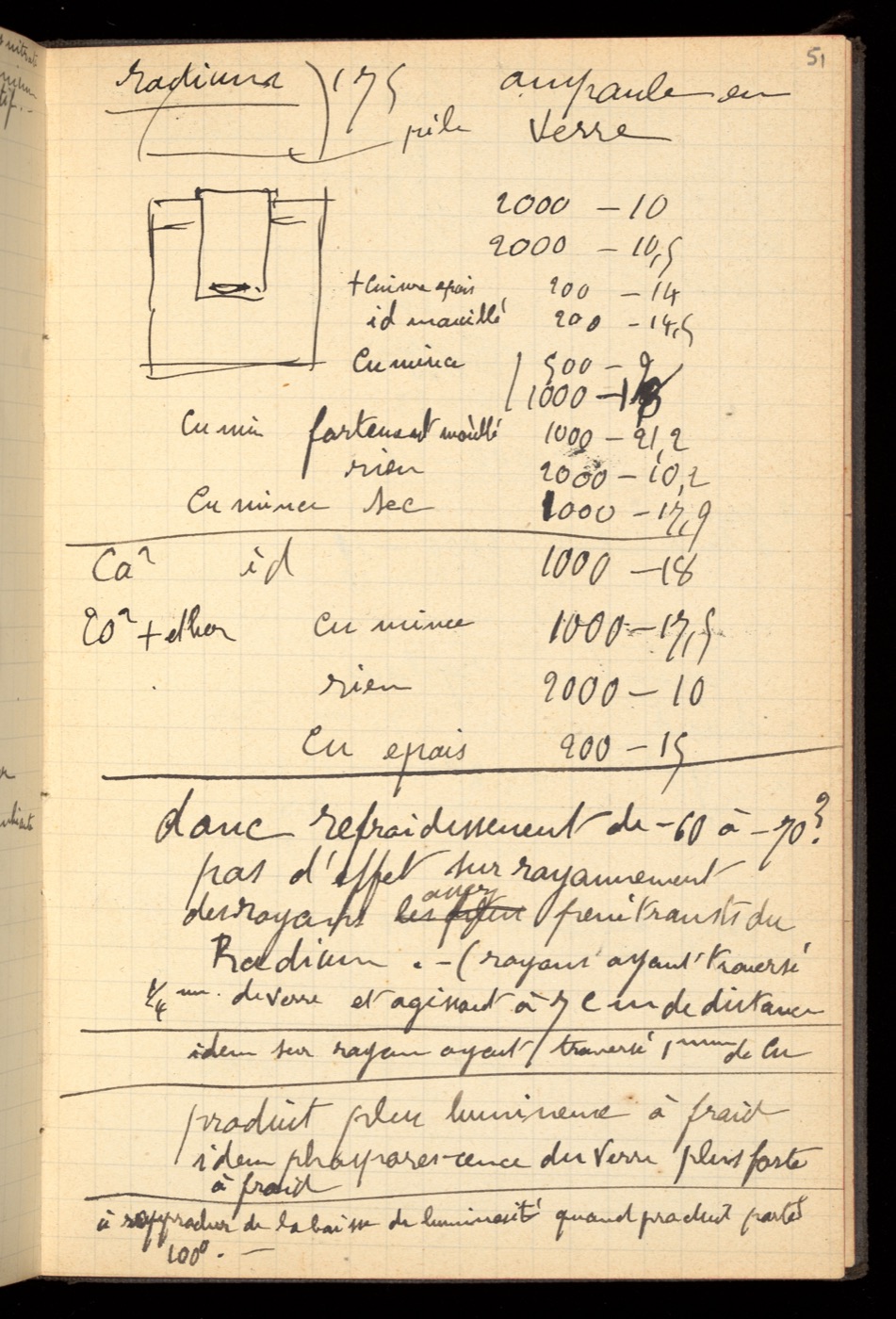
“We had an especial joy in observing that our products containing concentrated radium were all spontaneously luminous.”
From her book Pierre Curie, 1923. Translated by Charlotte and Vernon Kellogg, 1923.
The American Institute of Physics, in its history of her work, says the Curies traced radium by separating the ore and measuring the rays from each part. It says she took more than three years to isolate one tenth of a gram of pure radium chloride.
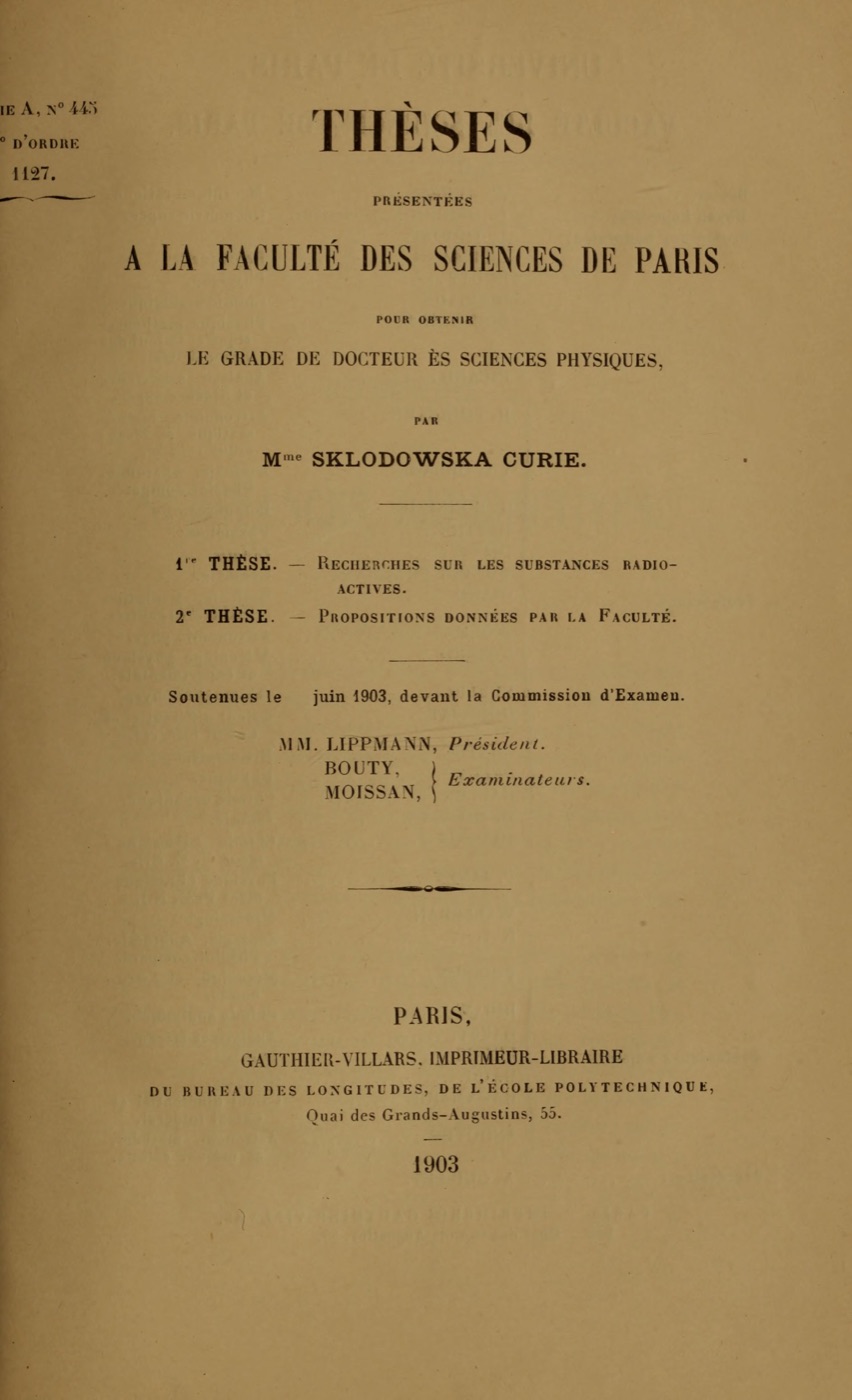
“My husband and I were much excited by this new phenomenon, and I resolved to undertake the special study of it.”
From her Autobiographical Notes, 1923, about the rays from uranium that Henri Becquerel had found. She chose them as the subject of her doctorate. Translated by Charlotte and Vernon Kellogg, 1923.
The American Institute of Physics says she defended the thesis in June 1903. It reports that her examiners said it “contributed more to scientific knowledge than any previous thesis project”.
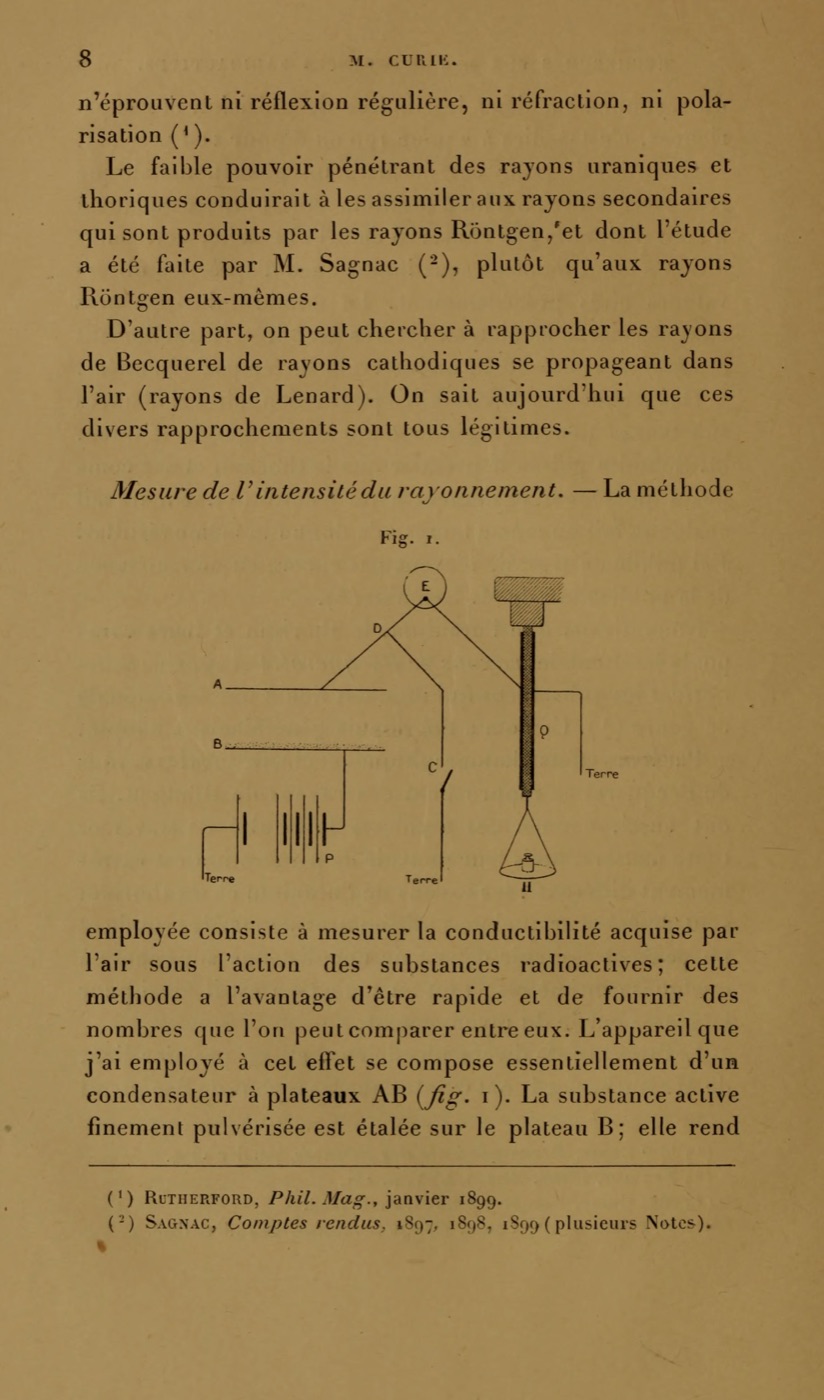
“Needless to say, the place for such an electrometric installation was hardly the crowded and damp little room in which I had to set it up.”
From her book Pierre Curie, 1923. Translated by Charlotte and Vernon Kellogg, 1923.
The American Institute of Physics says the electrometer, made by Pierre Curie and his brother Jacques, was essential to her work. The damp air made the charge leak away. Even so, she managed to make measurements that could be repeated.
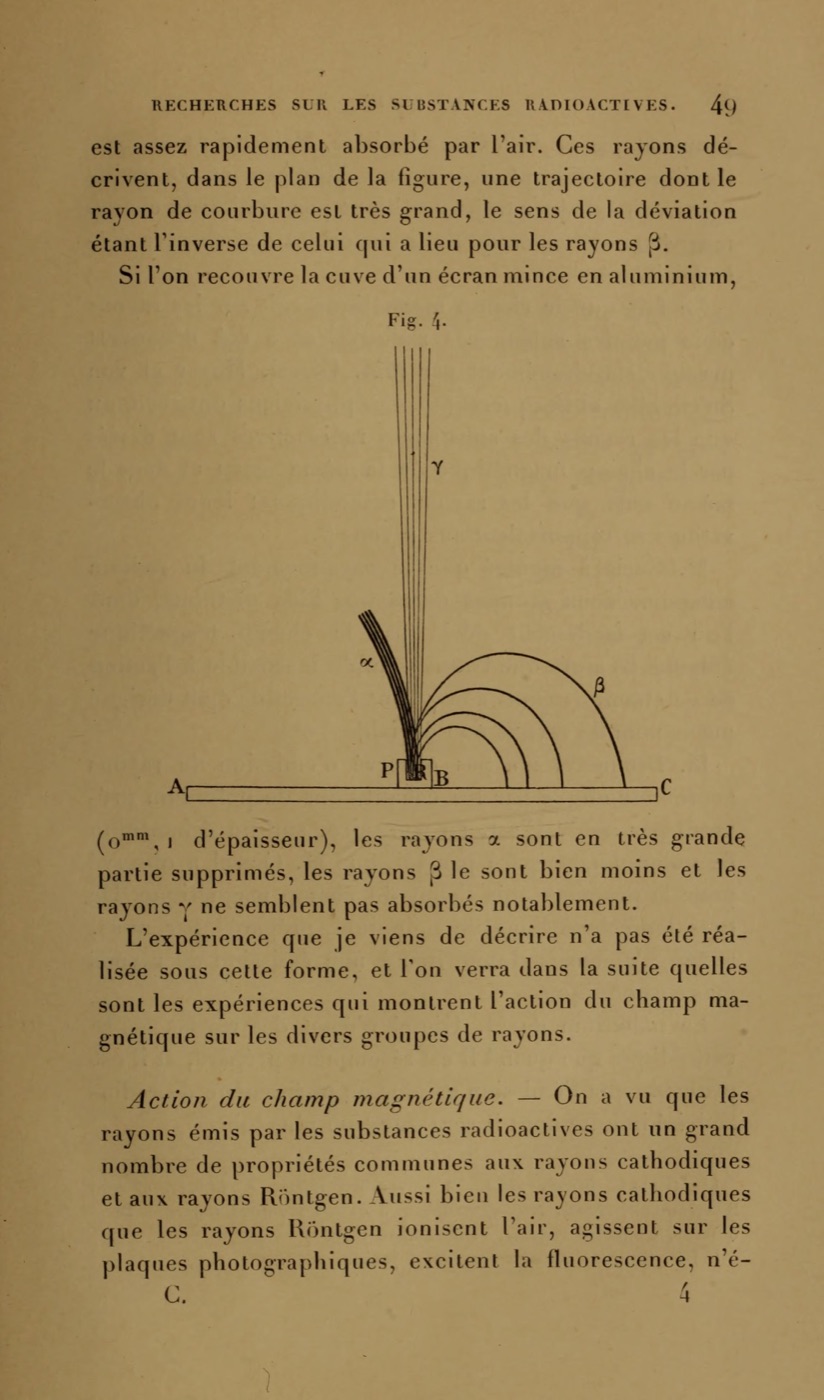
“The main result of our investigations and of those of other scientists during these years, was to make known the nature of the rays emitted by radium, and to prove that they belonged to three different categories.”
From her book Pierre Curie, 1923. Translated by Charlotte and Vernon Kellogg, 1923.
The American Institute of Physics explains the three kinds as they are understood today. Alpha particles carry a positive charge. Beta rays turned out to be electrons. Gamma rays are waves, like X-rays but with more energy.
Neither swift nor easy
The line most often attributed to Marie Curie has never been traced to anything she wrote. The words she actually left behind — about slow progress, a miserable shed, and the best years of her life — are better.
The books of Marie Curie
Four books by a scientist who mostly wrote papers: her thesis, a giant textbook finished in widowhood, a short book on x-rays in the First World War, and a loving life of her husband with her own story attached.
The passage on her mother's death
Marie Curie was ten when her mother died. Years later she wrote down what that loss did to her. The passage, then the same passage in plain words.
The passage on losing Pierre
In 1906 her husband was killed in a street accident. Her few plain paragraphs about what came after, then the same passage in plain words.
The passage on sudden fame
After the 1903 Nobel Prize, the world came knocking and their quiet was gone. What she wrote about it, then the same passage in plain words.
Marie Curie's whole life is an argument against fear. She came from a family of teachers who had lost their money, studied in secret when women weren't allowed, moved to Paris broke, and out-worked everyone around her.
She discovered new elements and named the thing she was studying: radioactivity. Two Nobel Prizes, in two different sciences — still the only person to ever do that.
And she did it in a cold shed, dismissed by half the establishment for being a woman, never chasing money or fame. The work was the point.
The famous 'nothing in life is to be feared' line has never been found in her writing. What she did write: 'The way of progress is neither swift nor easy.' That's the one to hold when you feel lost. Slow is not the same as stuck.