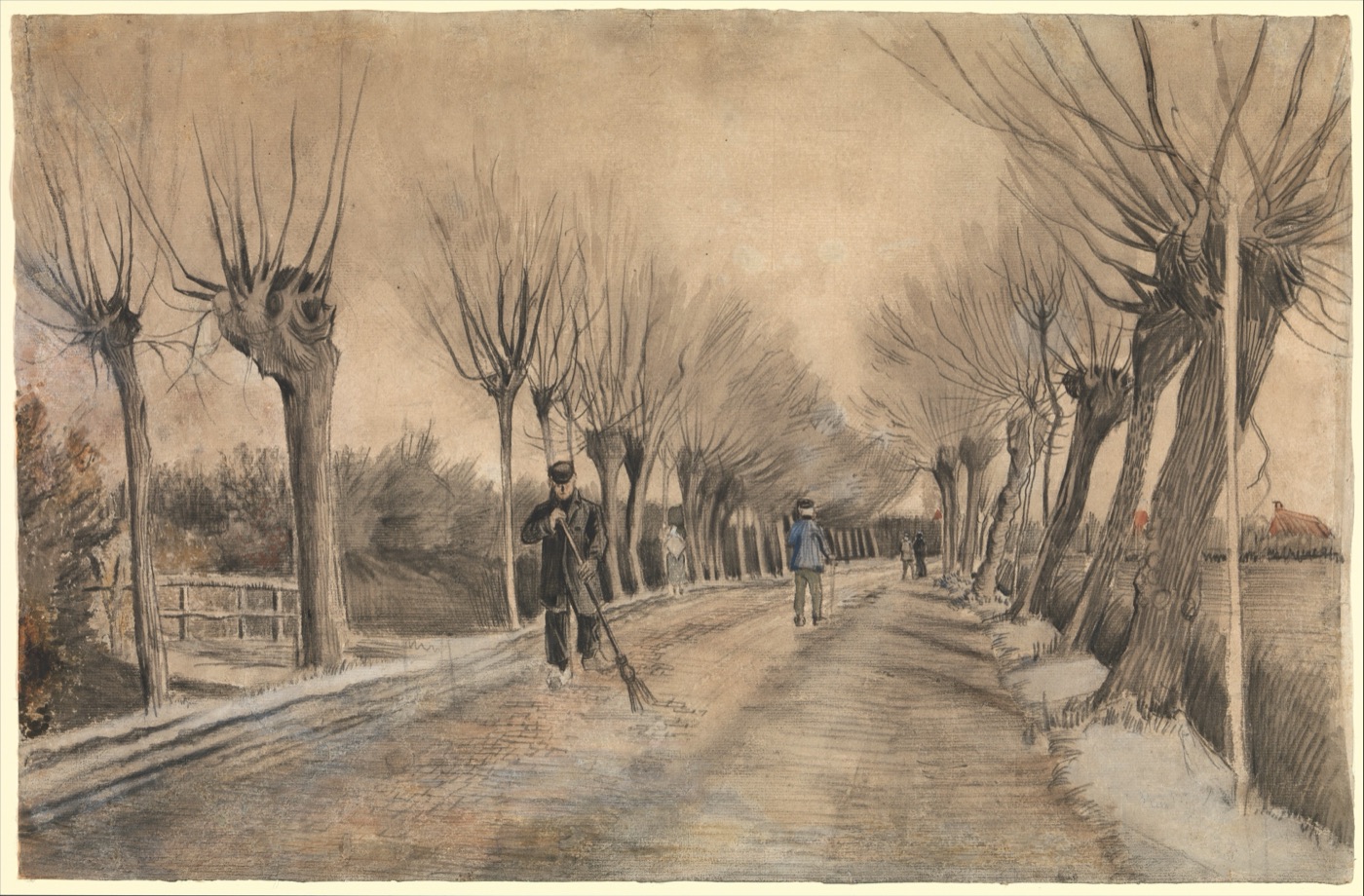
“If one draws a willow as if it were a living being, and it really is so after all, then the surroundings follow in due course …”
From a letter to his brother Theo, October 1881, about the willows he was drawing that autumn. Translated by Johanna van Gogh-Bonger, 1927.
The Metropolitan Museum of Art, which owns it, says that in Etten he drew local workers doing plain, everyday jobs. It calls this drawing a masterful example.
Sjraar van Heugten, a Van Gogh scholar, writes that he thought of trees like these as living beings, and that this feeling shows in his drawings of them.
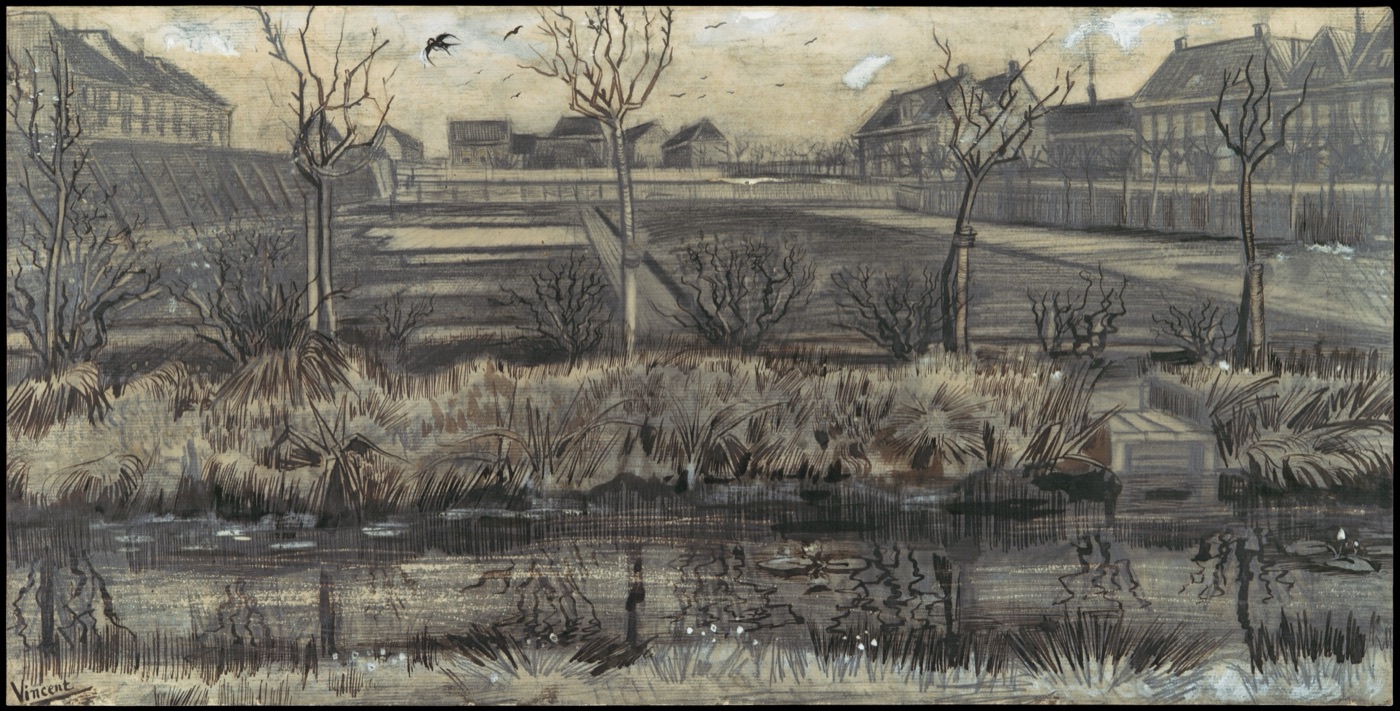
“I am busy drawing some figures and also a few landscapes, for instance a nursery here on the Schenkweg.”
From a letter to Theo, 24 March 1882. Translated by Johanna van Gogh-Bonger, 1927.
Two months later he told a friend he had worked on it again, on the ditch and the water. Only then, he felt, did it show spring and quiet. In plain words, from his letter of 28 May 1882.
The Metropolitan Museum of Art says it was part of his first paid order: views of The Hague for his uncle, an art dealer.
Sjraar van Heugten calls it a very good drawing, with the calm of a spring day. He says Van Gogh treated these city views as practice in drawing depth and distance.
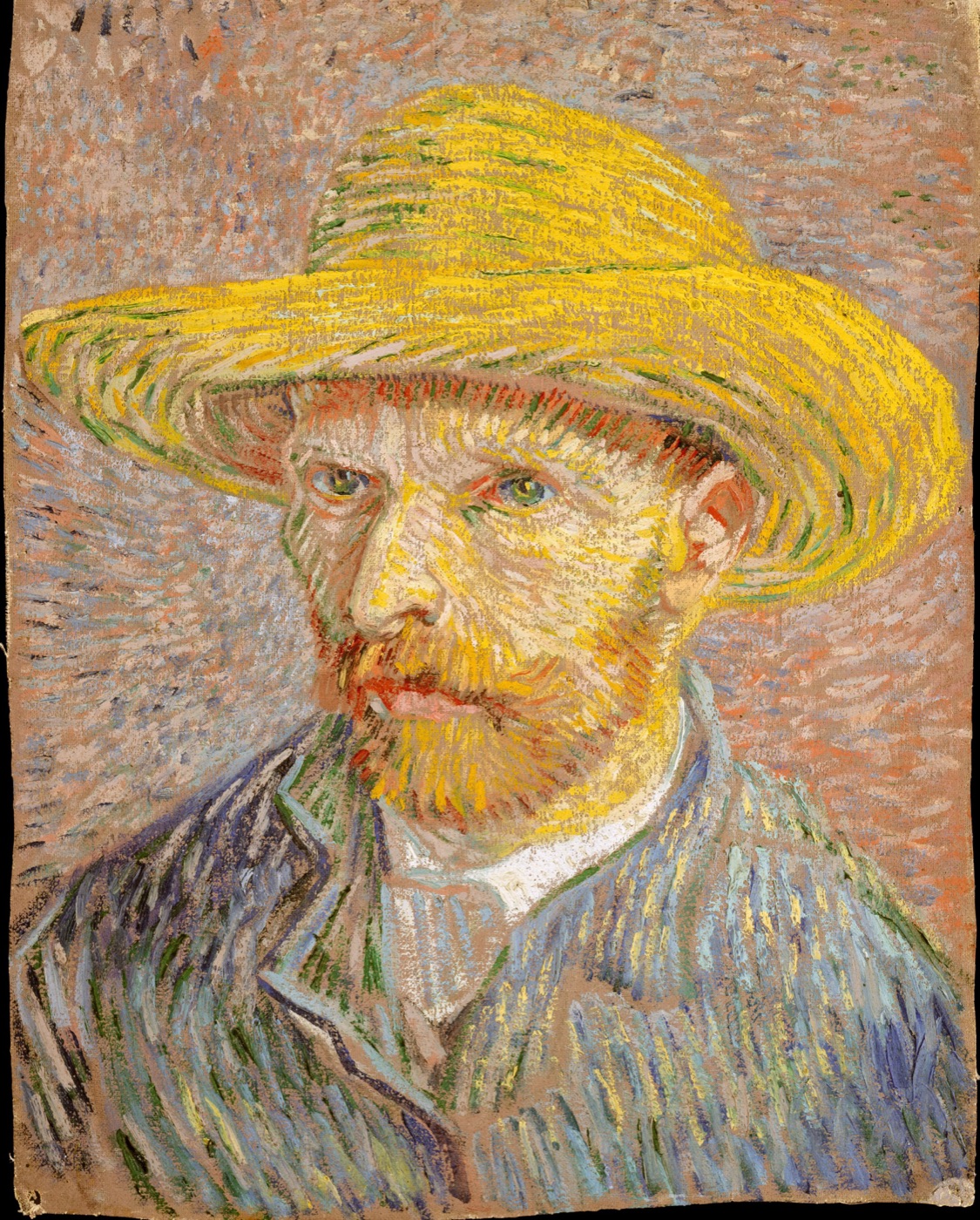
He did not write about this painting by name. That autumn he told his sister that he could not find people to sit for him, so he was using portraits to study colour. In plain words, from his letter of late October 1887.
The Metropolitan Museum of Art says he painted himself more than twenty times in Paris. He was short of money and wanted to get better at painting people, so he became his own best sitter.
Not everyone agrees it is his. The art dealer and writer Walter Feilchenfeldt doubted that Van Gogh painted it. The museum lists it as his work.
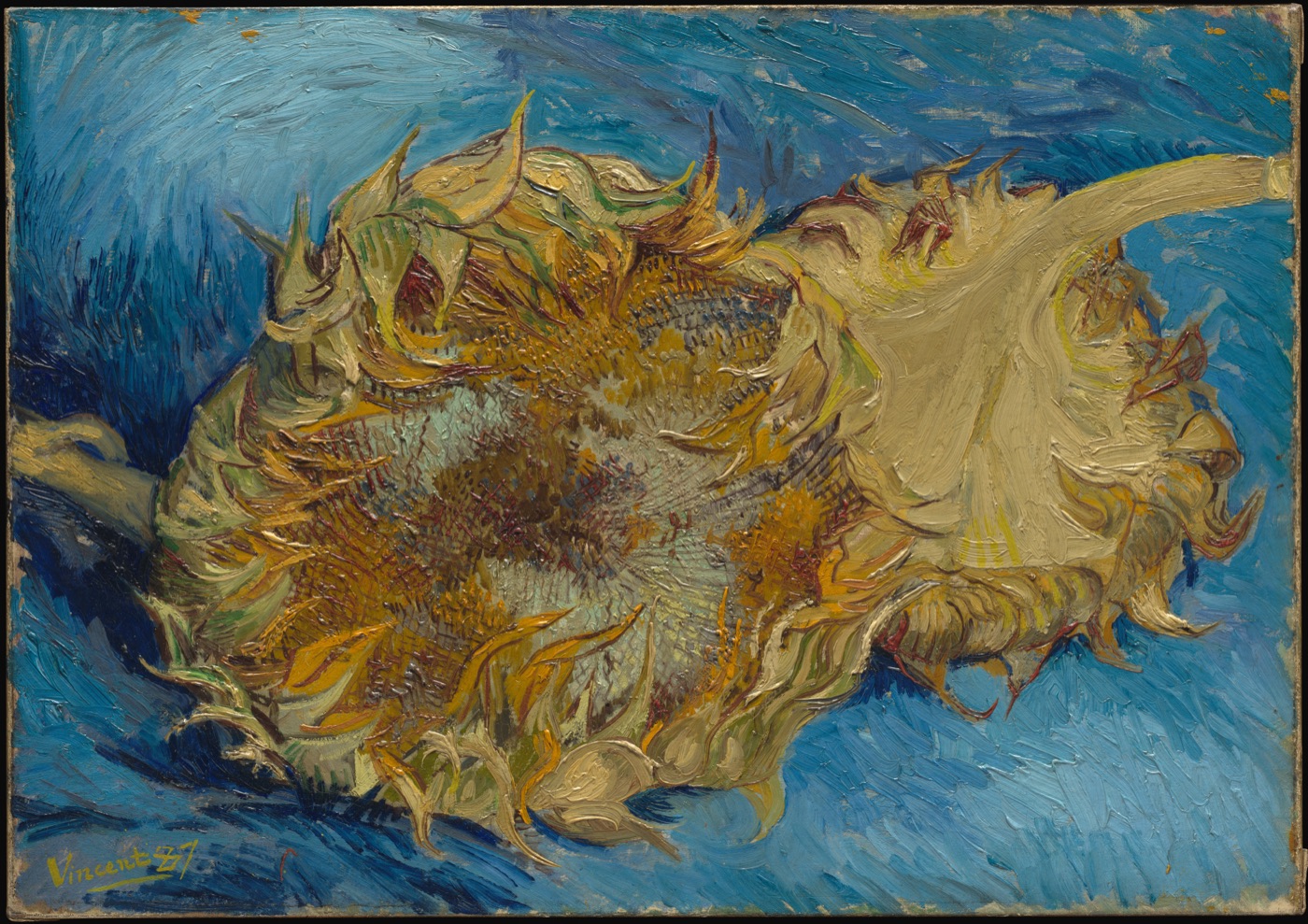
He left no letter about painting it. Two years later he wrote to Theo about two sunflower pictures that the painter Paul Gauguin had taken in Paris, in a swap for one of his own. This is one of the two. In plain words, from his letter of 17 January 1889.
The Metropolitan Museum of Art says Gauguin hung the two pictures above his bed in Paris and kept them for years.
Ella Hendriks and Louis van Tilborgh, of the Van Gogh Museum, date it to mid-September 1887, because the flowers have gone to seed. They advise against reading the sunflower as a symbol here.
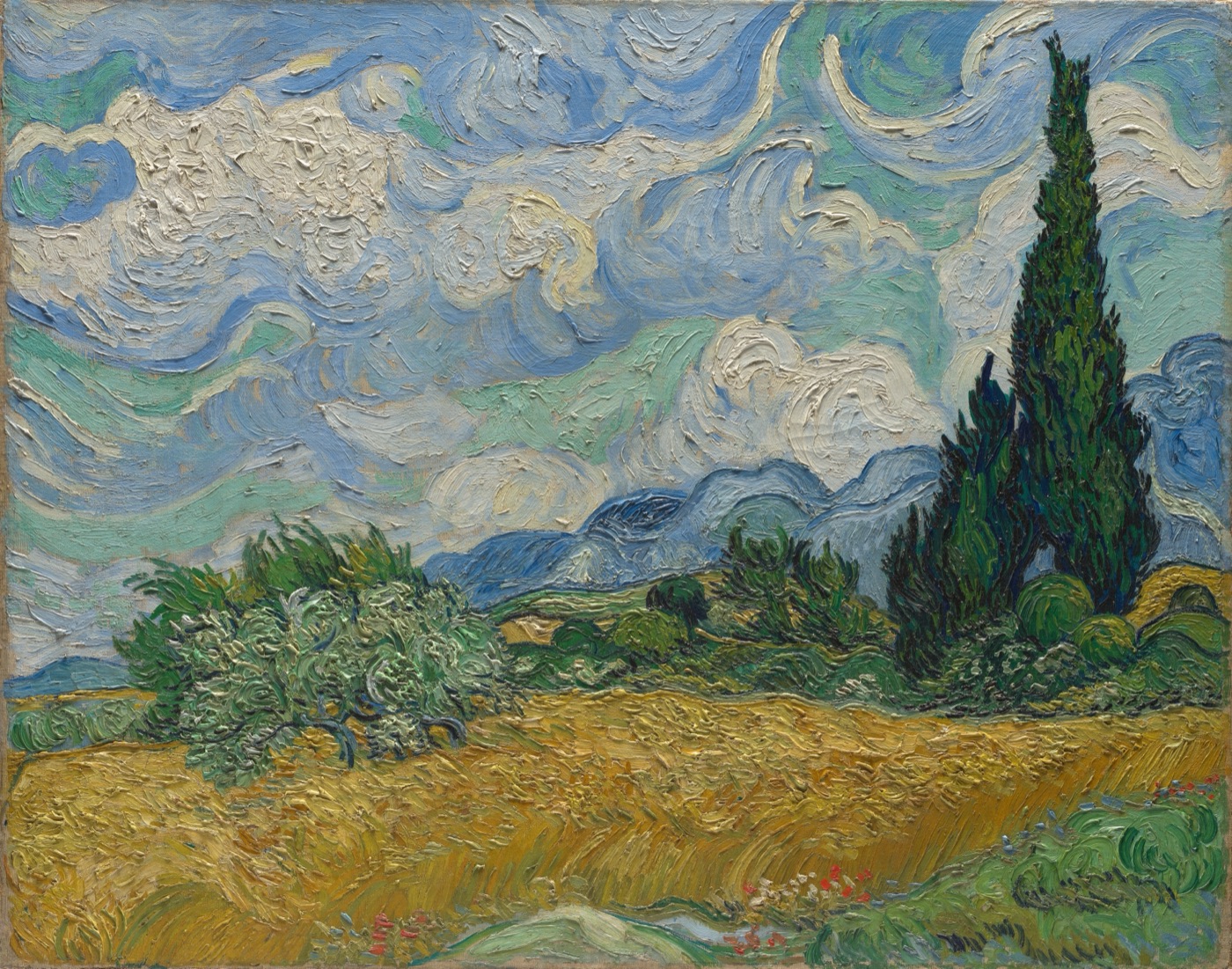
In June 1889 he told Theo that the cypresses were always on his mind. He wanted to paint them the way he had painted sunflowers. A week later he wrote that pain can seem to fill the whole horizon, and that it is better to look at a wheat field, even a painted one. In plain words, from his letters of 25 June and 2 July 1889.
The National Gallery, London, which owns a later version, reads the strong wind of the south of France moving through everything: the wheat, the trees, the clouds and the hills.
His brother Theo saw a drawing of it that summer. He wrote that the newest drawings looked as if they had been made in a fury.
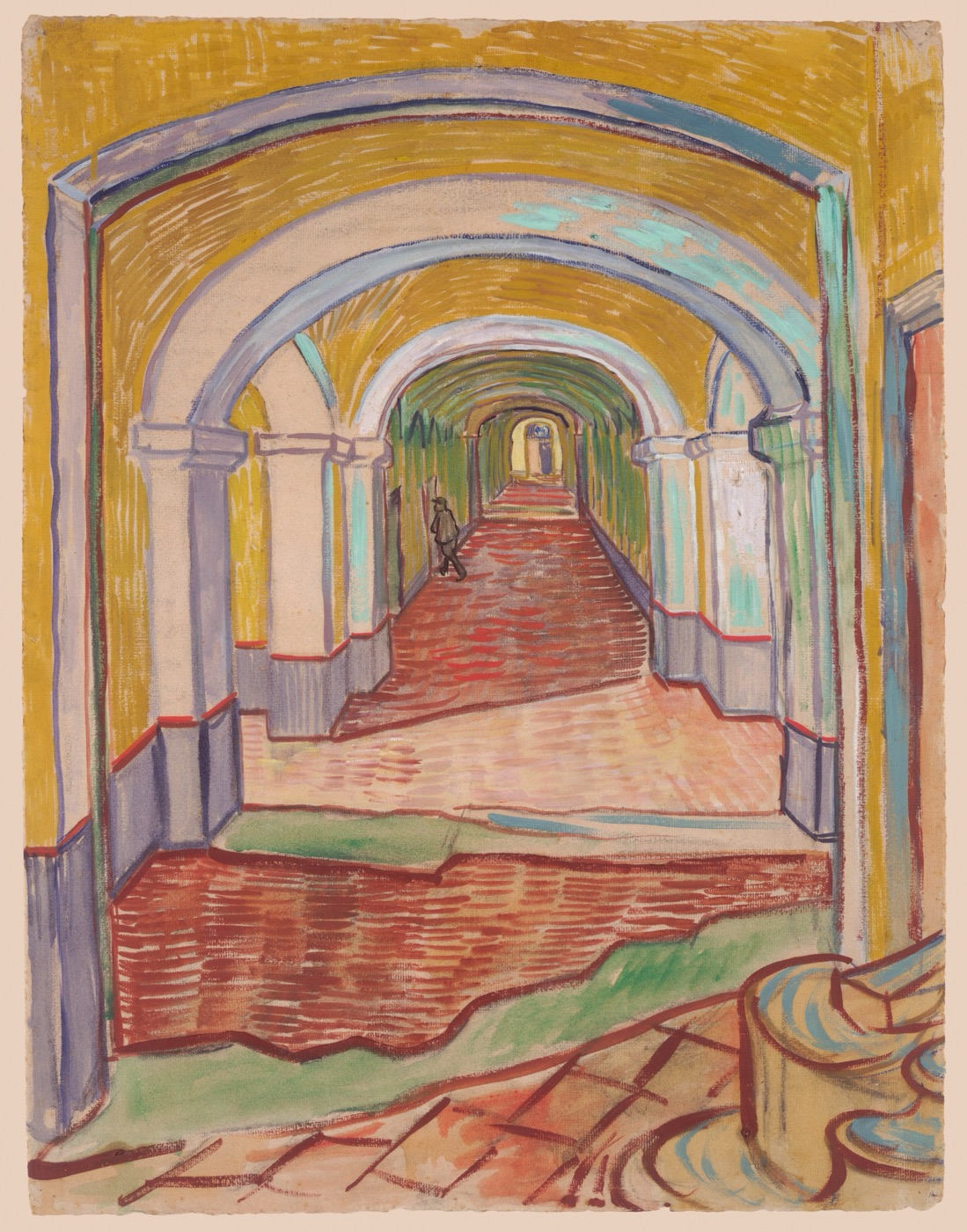
The Metropolitan Museum of Art says that, despite the colours, the long narrowing corridor feels “hollow and haunted”.
Marije Vellekoop, of the Van Gogh Museum, dates it to September 1889, when he had been ill and was not yet strong enough to work outside. Ronald Pickvance placed it earlier, just after he arrived, as a way to show Theo the place.
A bird in a cage in springtime
By 27 he had failed as an art dealer and as a preacher, with no income and no idea what he was for. He wrote to his brother about a caged bird that knows it is good for something and cannot do it. That same year he started drawing.
The letter about the heart of a nobody
Part of a letter he wrote to his brother in July 1882, in a 1927 translation: what he wanted his work to show, if most people saw him as a nobody. Then the same lines in plain words.
The letter about the iron wall
Part of a letter he wrote to his brother in October 1882, in a 1927 translation: the invisible wall between what one feels and what one can do. Then the same lines in plain words.
The letter about loneliness
Part of a letter he wrote to his brother from Drenthe, in the north of the Netherlands, in December 1883, in a 1927 translation: loneliness, and not solitude. Then the same lines in plain words.
The painting of a wheat field with cypresses
Wheat Field with Cypresses, painted in 1889 while he was a patient at a hospital in the south of France. What is in the picture, what he wrote, and how others have read it.
The books of Vincent van Gogh
Van Gogh never wrote a book. He left hundreds of letters, most of them to his brother Theo. This is a guide to the editions that brought those letters to readers, from 1914 to today.
If any of this is close to home and you are struggling to stay safe, you can call or text 9-8-8, any time, in Canada or the US. If you are in danger right now, call 9-1-1.