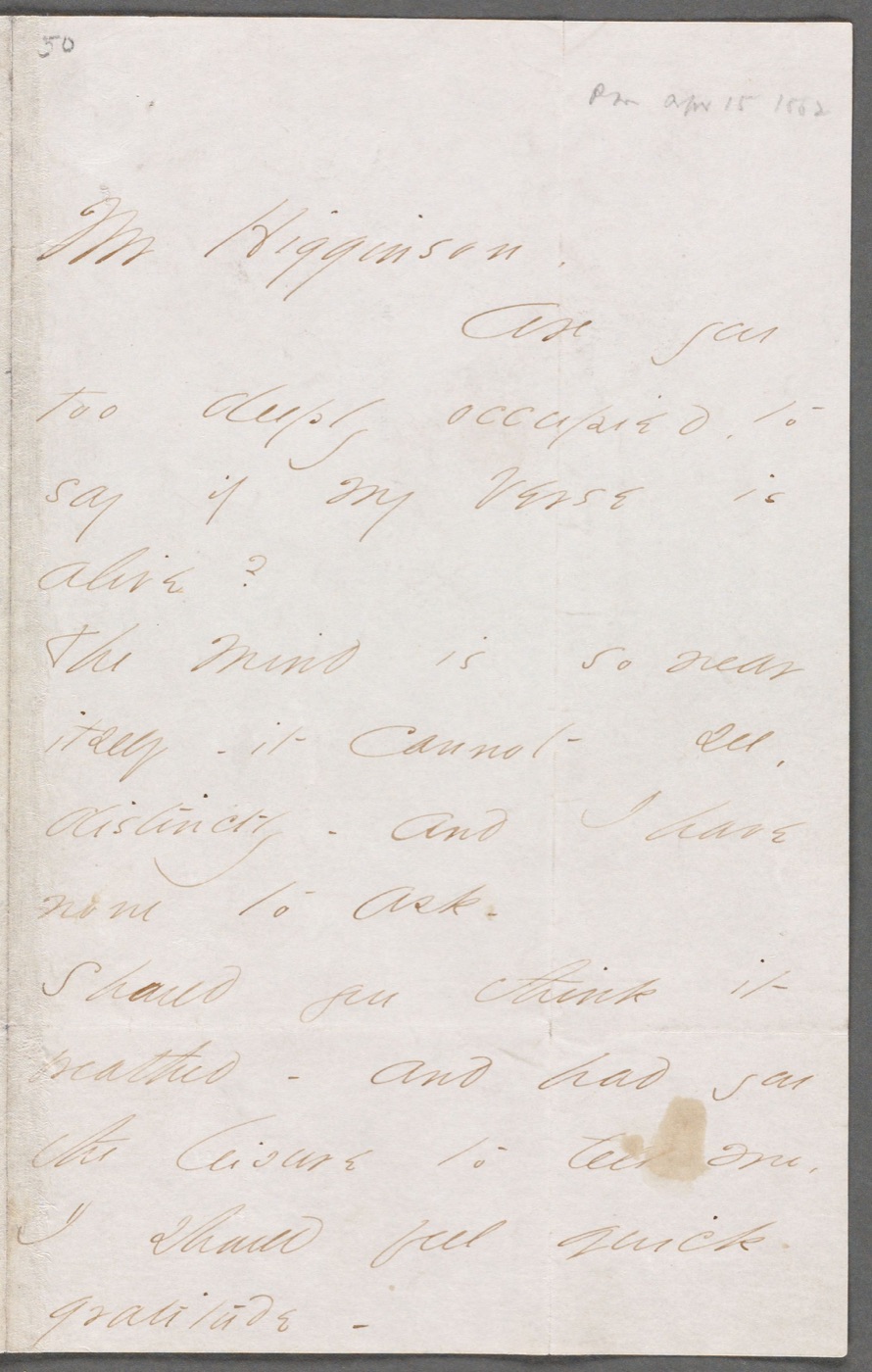
“Are you too deeply occupied to say if my verse is alive? The mind is so near itself it cannot see distinctly, and I have none to ask.”
From this letter, as Higginson printed it in The Atlantic Monthly, October 1891. He evened out her punctuation and capitals.
Thomas Wentworth Higginson, who received it, wrote in 1891 that the letter had no signature. Her name was on a card, in pencil, inside a smaller envelope.
He also wrote that her handwriting looked as if she had learned it from the fossil bird tracks in the Amherst college museum. He called the letter “cultivated, quaint, and wholly unique”.
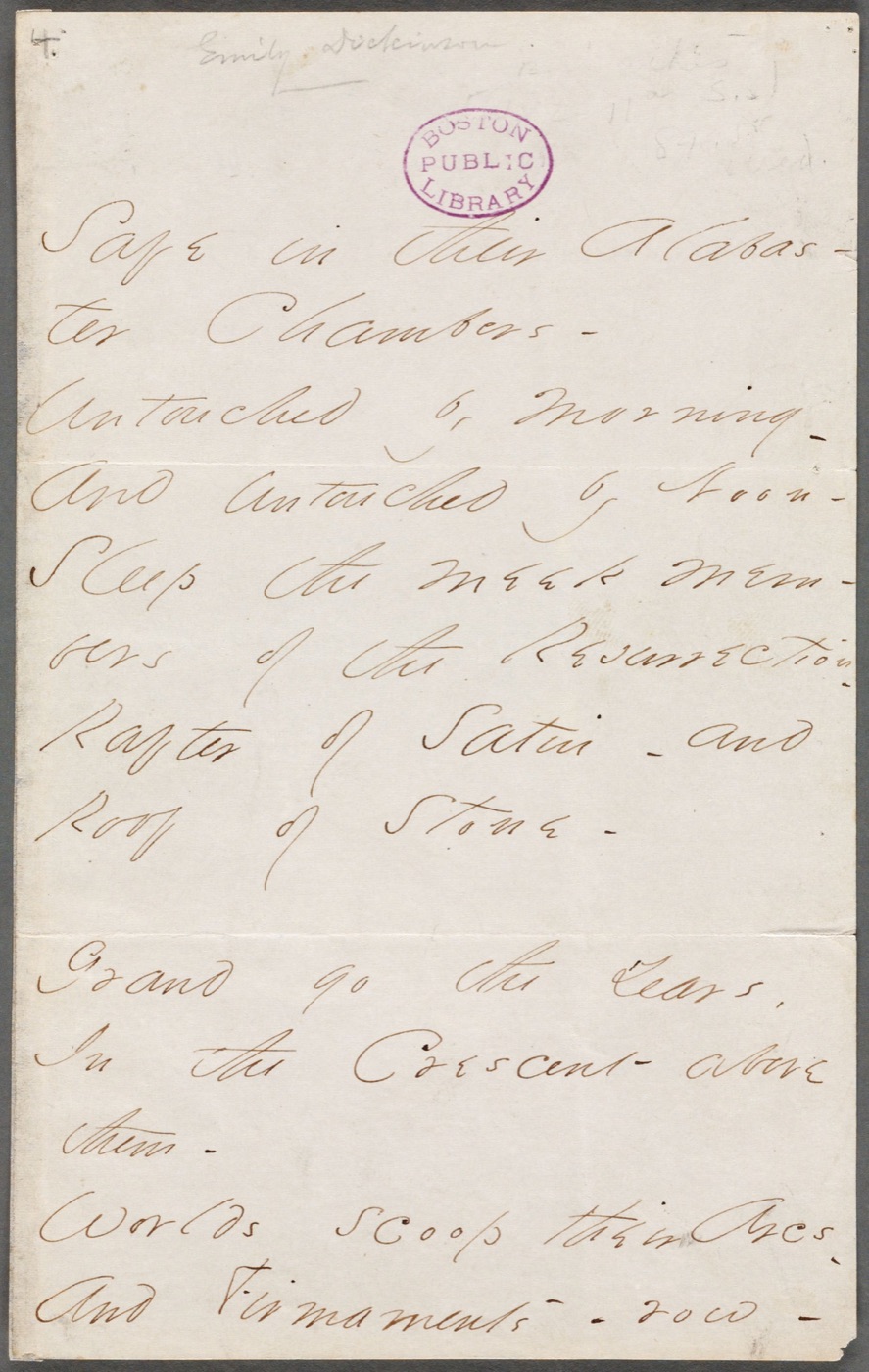
Thomas Wentworth Higginson wrote in 1891 that these four poems gave him the sense of “a wholly new and original poetic genius”. Thirty years later, he said, that sense had not changed.
Martha Nell Smith, of the Dickinson Electronic Archives, writes that this poem is the only known case of Dickinson reworking a poem in direct answer to another reader's advice. Her sister-in-law Susan Dickinson read it, and she wrote four different second verses for it.
The Emily Dickinson Museum notes that a newspaper, the Springfield Daily Republican, had printed it on 1 March 1862, without her name. Scholars believe she did not agree to any of the printings in her lifetime.
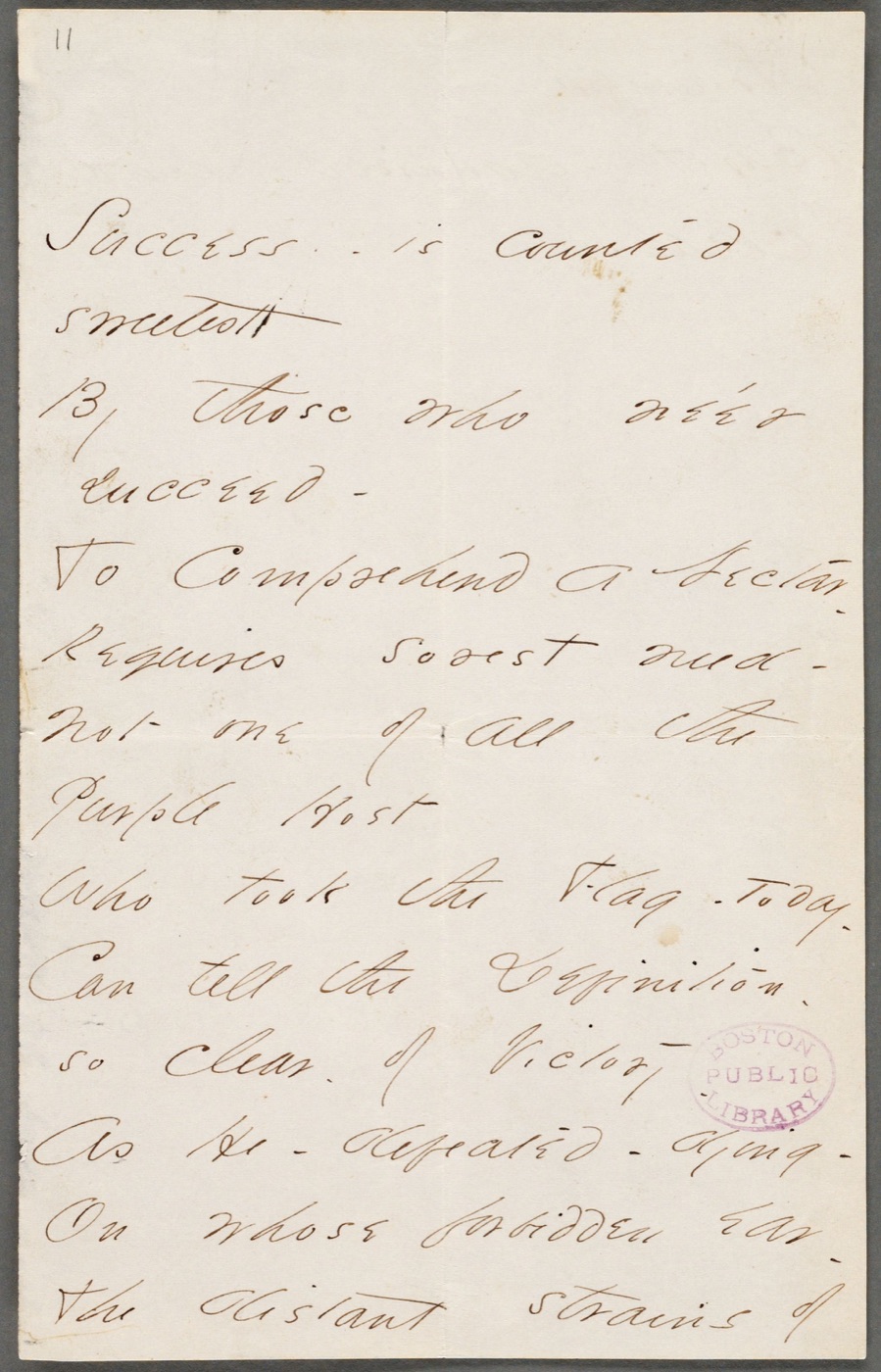
Years later she told Higginson that her friend Helen Hunt Jackson had asked her to write for the No Name Series, books printed without the authors' names. She did not want to.
“I said I was incapable, and she seemed not to believe me.”
From a letter to Higginson, as he printed it in The Atlantic Monthly, October 1891. He gave no date for it.
The Emily Dickinson Museum says Jackson tried to get her to send this poem to a book of poems printed without names. It came out in A Masque of Poets in 1878, a book in that series. It was the only time a poem of hers was printed in a book while she lived. The museum says it is not clear whether she sent it herself, or Jackson sent it without her clear consent.
Mabel Loomis Todd and Thomas Wentworth Higginson put it first in the 1890 book of her poems, under the title “Success”.
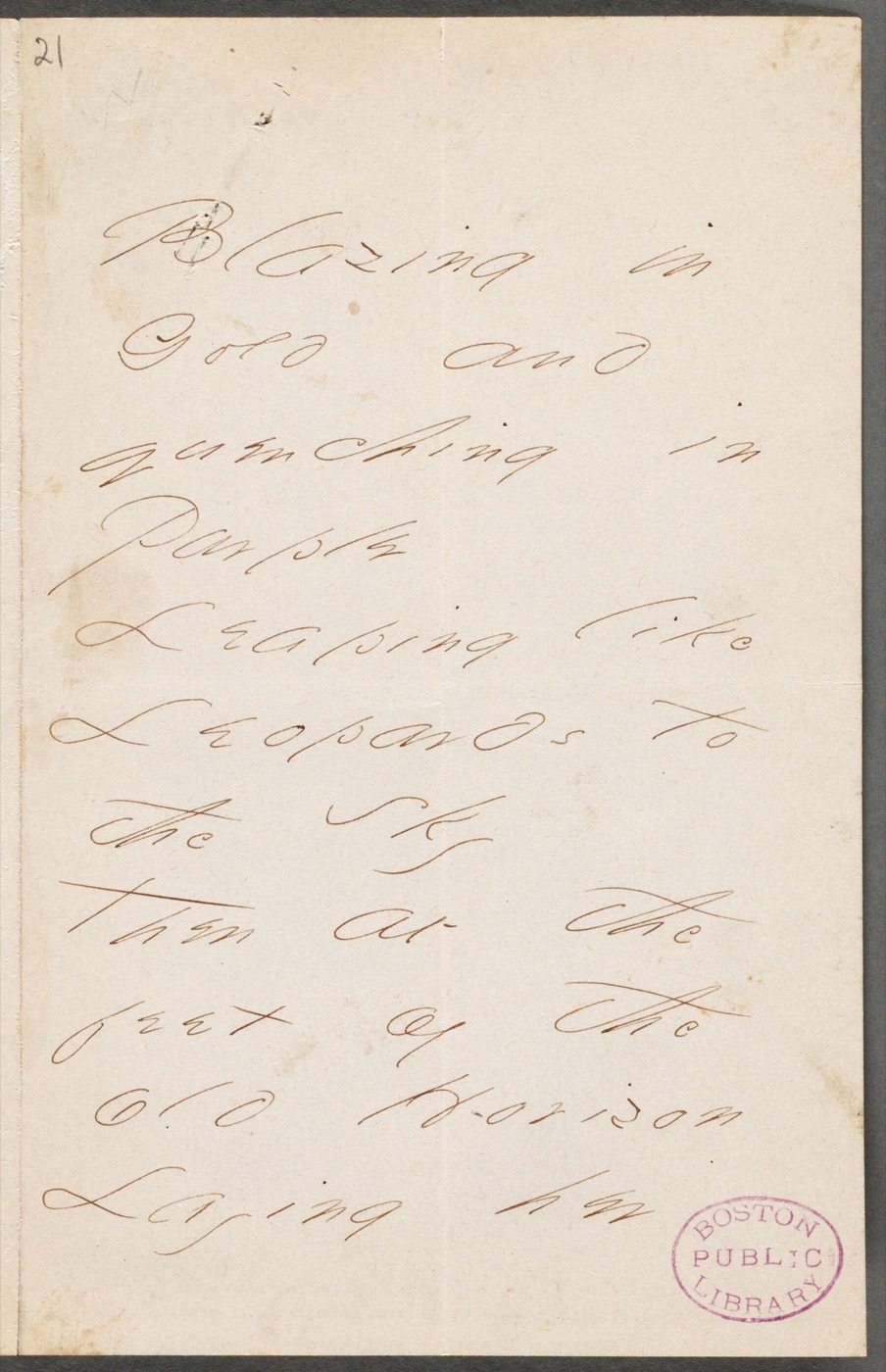
The Emily Dickinson Museum lists it among the few poems printed in her lifetime. A Brooklyn paper, the Drum Beat, printed it in 1864 without her name, under the title “Sunset”.
Thomas Wentworth Higginson and Mabel Loomis Todd printed it in 1891 as “The Juggler of Day”. Neither title was hers.
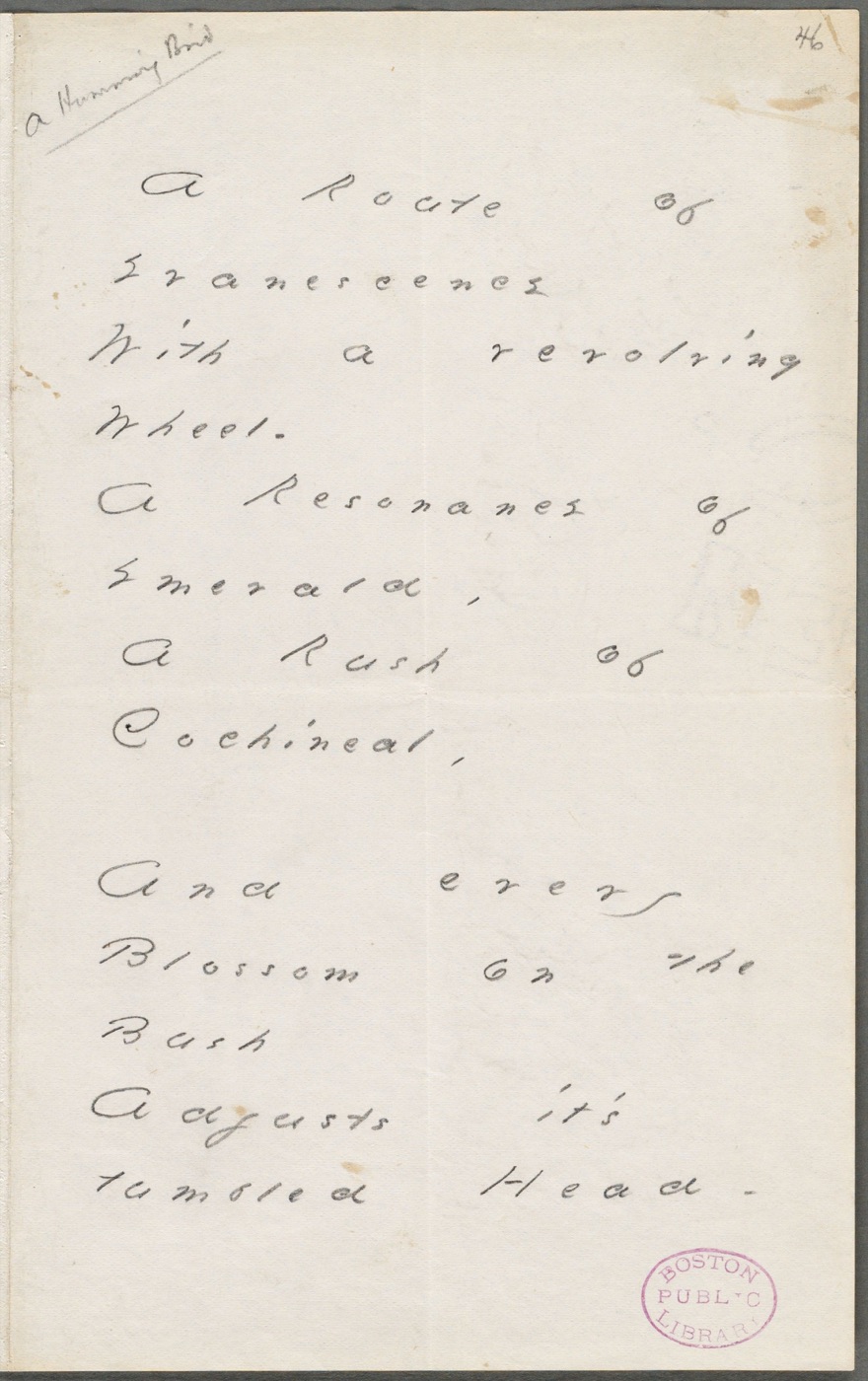
Thomas Wentworth Higginson printed it in his 1891 article. He wrote that nothing in literature so condenses “into a few words that gorgeous atom of life and fire”.
He and Mabel Loomis Todd printed it the same year in the second book of her poems, as “The Humming-Bird”.
This is my letter to the world
She withdrew from rooms, spoke to visitors through doors and published almost nothing, while writing nearly 1,800 poems and over a thousand letters. Unseen by choice, and reaching out the whole time.
Where the meanings are
In sixteen short lines, she named a heaviness that arrives with the winter light, leaves no mark anyone could point to, and changes something inside. A low that has no visible cause.
The poem about night and morning
One of her poems, shown whole as it was first printed in 1890: eight lines about the share of night and the share of morning that each of us gets. Then the same poem in plain words.
The poem about false shores
One of her poems, shown whole as it was first printed in 1891: eight lines about thinking, many times, that peace had come when it had not. Then the same poem in plain words.
The poem about time and grief
One of her poems, shown whole as it was first printed in 1896: eight lines saying that time did not ease her suffering. Then the same poem in plain words.
The books of Emily Dickinson
She published almost nothing in her life, so every Dickinson book is an edition made by someone else. A guide to how her poems and letters reached the world, from 1890 to 2024.
If any of this is close to home and you are struggling to stay safe, you can call or text 9-8-8, any time, in Canada or the US. If you are in danger right now, call 9-1-1.